
Coahoma Projected Versus Actual Release
MDOC calls its public field the “Tentative Release Date.” That wording is precise. It reflects the agency's current calculation for a state sentence, not a promise that a gate will open that day. The calculation can change when lawful credit, discipline, corrected court papers, sentence structure, or another custody hold changes the record. A release date shown before the event is therefore a planning point. The final release or discharge instrument confirms what occurred.
A person held before trial at the Coahoma County Detention Facility is in a different position. Bond, a new court order, dismissal, another hold, or later sentencing can control departure. There may be no computed release date at all. Even a locally sentenced person should not be placed under MDOC's earned-release formula unless MDOC actually holds the state sentence.
“Released to MDOC” in a county record is also a transfer, not community release. Once that transfer occurs, the state record becomes the right place to read a tentative date.
Find Coahoma County Projected Release
The search path begins with custody type. For an MDOC-sentenced person, use the MDOC Inmate Search. For a person still held on a Coahoma case, call the detention facility and review the court order. For an old state case or a public result that lacks enough detail, send a focused request to MDOC Records. Names alone can create false matches, so an MDOC number or booking number is valuable.
- Confirm whether the person is in the county jail, MDOC custody, another state, federal custody, or the community.
- For MDOC, search by first and last name or MDOC number. Open the matching detail only after checking public identifiers.
- Read the location, sentence blocks, county of conviction, and the field labeled Tentative Release Date together.
- For a county-jail sentence, ask the jail and sentencing court how the order and jail credit were applied. Do not import the state ERS formula.
- For a final answer, contact the case manager, MDOC Records, court clerk, or jail records channel that controls the record.
The official MDOC detail interface demonstrates where conviction, sentence, location, and tentative-release fields appear. The example is used only to show the interface, not to discuss the person in the record.
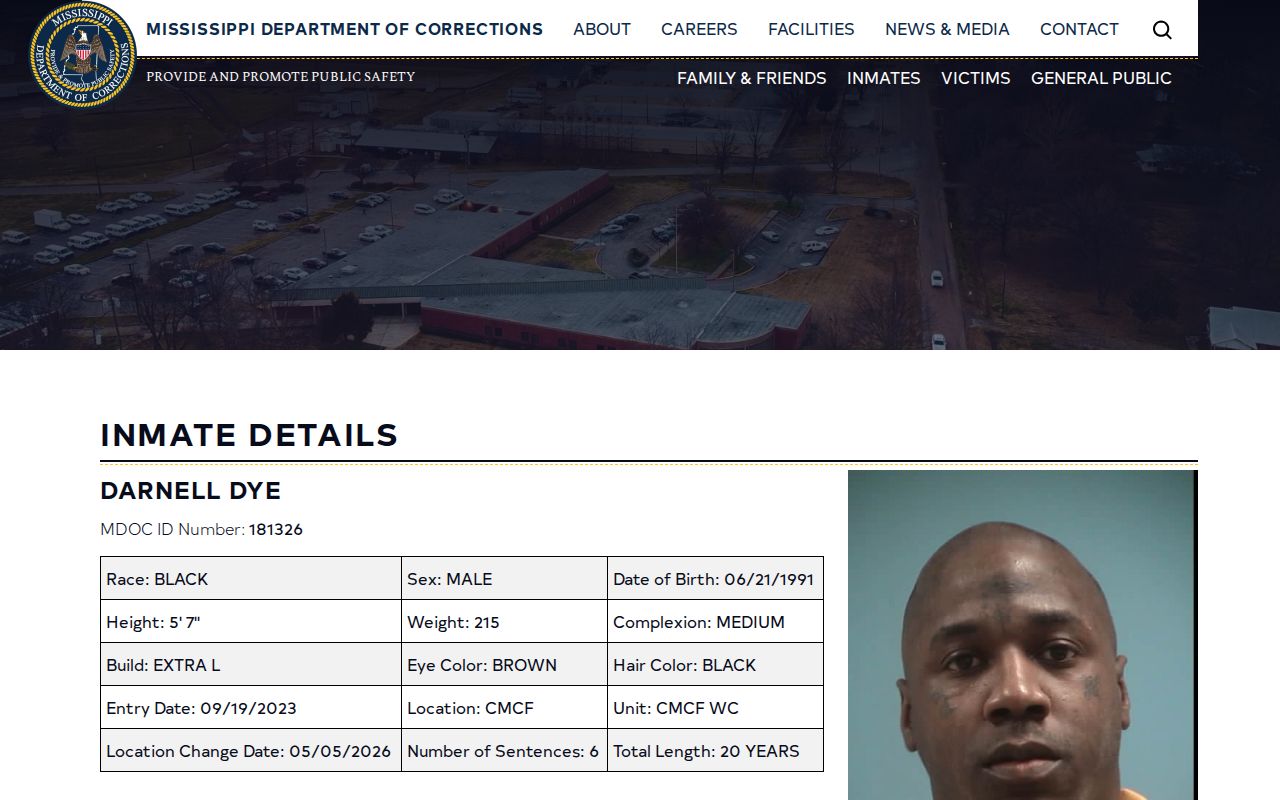
The layout shows why the date should never be detached from the sentence and location fields that give it context.
Note: A Coahoma conviction on an MDOC detail does not mean the person is housed in Coahoma County or leaving the county jail.
MDOC Coahoma Release Date Fields
MDOC's public record contains more than one date and status clue. The observed interface includes an entry date, current location, location-change date, sentence date, total sentence length, and Tentative Release Date. A sentence block also identifies the offense and county of conviction. These fields help distinguish an MDOC computation from a county booking record, yet none should be rewritten as a confirmed community-release date.
| MDOC field | How to read it |
|---|---|
| Entry date | When the state record shows entry into the MDOC system, not the original arrest date. |
| Location | The current MDOC placement shown by the system; it may be outside Coahoma County. |
| Sentence date | The date tied to the displayed sentence block and court action. |
| Total sentence length | The sentence measure shown by MDOC, which still requires lawful credit and eligibility rules. |
| Tentative Release Date | The current projected date, not a confirmed departure or discharge. |
Older or completed state cases may need the records channel because the live page does not promise a full historical event trail. Ask for the master-file status, release or discharge date and type, and supervision completion date when those items are relevant and public.
MDOC records can remain active while a person is confined or under community supervision. After the sentence and supervision end, an inactive master file may hold the older computation and discharge history. A focused written request should identify the person and MDOC number, if known, and ask for specific date fields rather than an unrestricted file. The agency can then apply its record rules and identify any withheld part.
Coahoma Earned-Time Release Rules
Mississippi's main earned-time statutes are Miss. Code §§ 47-5-138 and 47-5-139. MDOC also describes a commonly cited framework for eligible sentences imposed under the post-July 1, 1995 system: an eligible person may serve 85 percent in a facility and the remaining 15 percent on Earned Release Supervision. That shorthand is not a universal rule for every person or every sentence.
Offense date, offense classification, sentence date, exclusions, habitual status, and sentence structure matter. The law can also bar earned time for specific people or offenses. Earned time cannot be assumed to reduce the period needed for parole eligibility when the parole statute prohibits that effect. Parole under Miss. Code § 47-7-3 follows a separate eligibility and decision process.
The MDOC types of supervision page explains ERS, parole, probation, and calculated dates.
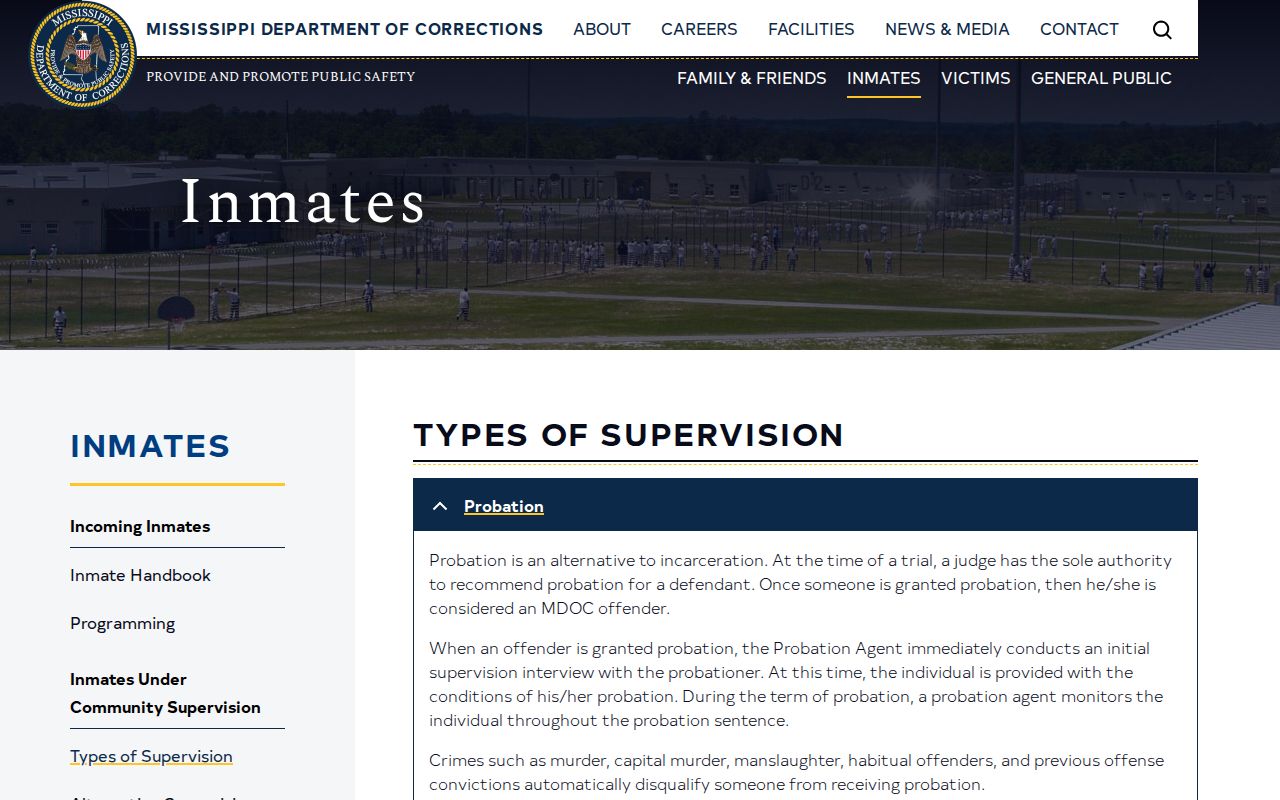
The official distinction prevents a tentative ERS date from being mislabeled as a parole grant or a completed discharge.
Coahoma Jail Credit Calculations
MDOC's handbook says allowable presentence jail time is deducted when the time was served on the relevant cause and otherwise qualifies. This credit helps establish the sentence-begin date. Corrected sentencing papers, amended orders, and multiple sentences can change the computation after the first record is built. Consecutive sentences run one after another, while concurrent sentences overlap as the lawful orders direct.
A Coahoma County jail term still requires local confirmation. No county-specific good-time rule or weekend-release statute was found in the research. Ask the Coahoma County Detention Facility and the sentencing court how jail credit and the particular judgment were applied. A state earned-release percentage cannot be copied onto a locally served misdemeanor sentence. The correct record may be a jail release entry, sentencing order, amended order, or clerk docket rather than an MDOC detail.
Coahoma Circuit Court handles felony matters, while lower-level cases may belong in County Court, Justice Court, or the proper municipal court. The originating case number helps route the request. Ask the clerk for the sentencing judgment, any jail-credit finding, later amended order, probation order, or revocation entry that bears on the custody term. A clerk record can explain the legal basis for the date even when the jail provides the actual departure entry.
Note: When court paperwork changes, wait for the custodian to apply it before treating a new Coahoma County release date as final.
Why Coahoma Release Dates Change
A projected release date is the result of facts and legal rules that can change. Some changes move a date. Others prevent a planned departure even if the displayed computation remains. The table separates the most common causes found in the MDOC research so a public result is not reduced to one number.
| Factor | Possible effect | Best confirmation |
|---|---|---|
| Jail-time credit | Can alter the sentence-begin calculation when the time qualifies. | MDOC Records and sentencing order |
| Disciplinary loss or restoration | Can change allowable earned time under governing rules. | MDOC institutional record |
| Corrected court papers | May change sentence length, structure, or credit. | Filed amended order and agency computation |
| Detainer or other hold | May send the person to another custodian instead of the community. | Holding and receiving agencies |
| Parole decision | A grant, denial, deferment, rescission, or revocation affects the route and timing. | Mississippi State Parole Board |
| Release plan review | An unapproved residence or incomplete plan can delay conditional release. | Case manager and Community Corrections |
Actual departure still requires final processing. A “granted” parole result does not prove the person has left prison, just as a future tentative date does not prove the exact time of release.
MDOC Coahoma Release Planning
ERS eligibility alone does not open the gate. MDOC reviews institutional conduct and a proposed residence. The person provides an address, and Community Corrections reviews that plan. A case manager communicates the verified date and coordinates the release process. The public date can therefore remain tentative while the agency resolves lawful requirements and prepares the final event.
The MDOC family and friends FAQ explains that exact release information comes through the agency process and that parole and ERS dates are not guaranteed.
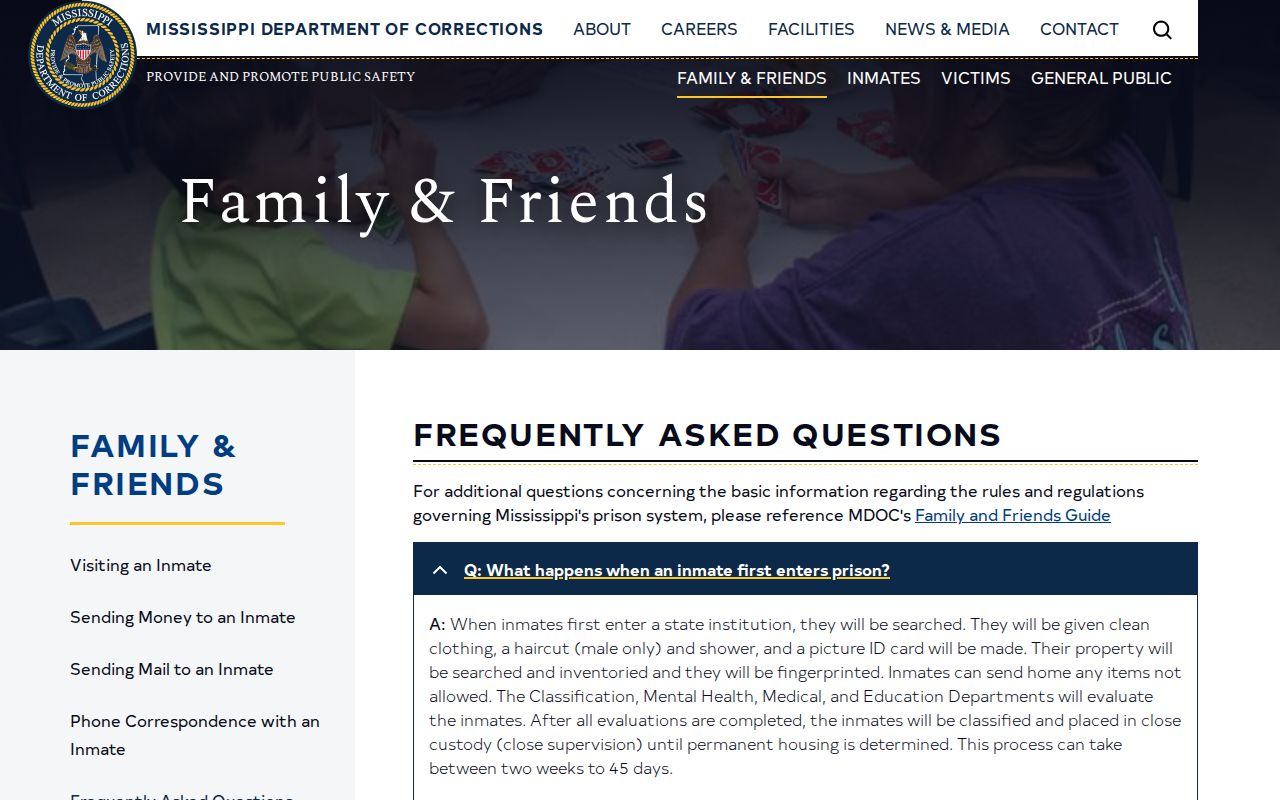
The FAQ supports using the case manager, Records Department, and Parole Board by subject instead of trying to calculate the exact date from a headline percentage.
Confirm Coahoma County Release
Use the final record from the agency that held the person. For MDOC, ask the case manager or Records Department for the confirmed computation and release or discharge instrument. MDOC Records is at P.O. Box 24388, Jackson, MS 39225, 601-933-2889, and MDOCRecordsDepartment@mdoc.state.ms.us. For the Coahoma County Detention Facility, call 662-624-3085 for current status and request the local release or transfer entry for durable proof.
Notification can help with timing. The Coahoma County VINELink inmate search describes how to register for release, transfer, and custody-change alerts. Treat the alert as a prompt to verify the agency record because data can lag and more than one event can occur close together. The Coahoma County released-inmate lookup covers the full county, court, MDOC, and federal record path when the custodian is uncertain.
Write down the source, displayed label, agency, and lookup date. “Tentative Release Date,” “Released to MDOC,” “parole granted,” and “released from custody” are not interchangeable. The right conclusion names both the event and the office whose record proves it.
Mississippi's Public Records Act supplies a request framework when an available record is not posted online. A response can be subject to exemptions, redaction, or an agency procedure, and lawful fees may reflect actual search, review, duplication, and mailing costs. Ask for an itemized estimate instead of assuming a fixed amount. If a record is partly restricted, request the segregable public portion and a citation to the exemption used for any denial.